

Here is the honest answer: insulin resistance usually has no symptoms, especially in the early years. Most people with insulin resistance or prediabetes feel fine, and you can’t tell by looking at someone whether they have it. So the useful question isn’t only “what will I feel?” It is also “what puts me at risk, and what can I check?” This guide covers the signs that may show up later, the risk factors worth acting on now, how clinicians test for it, and the everyday habits that help you manage it.
TL;DR
- Insulin resistance often causes no symptoms at first, because the pancreas makes extra insulin to compensate.
- Symptoms such as strong thirst and frequent urination tend to appear when blood sugar has already risen, which points to prediabetes or diabetes.
- Risk factors (family history, extra weight, high triglycerides, low HDL, inactivity, age 45 or older) are often a better early signal than symptoms.
- Doctors usually check blood sugar with an A1C or fasting glucose test rather than measuring insulin resistance directly.
- Movement, a balanced diet, modest weight loss, sleep and stress care can help reverse it, and medication is an option when appropriate.
Table of Contents
- What insulin resistance means in plain language
- Why you may not feel anything
- Signs that blood sugar may already be high
- Risk factors: the early signals that matter most
- How doctors check for insulin resistance
- How to manage and reverse insulin resistance
- When to see a doctor
- Our perspective
- Get checked in Katy
- FAQ
- Sources
What insulin resistance means in plain language
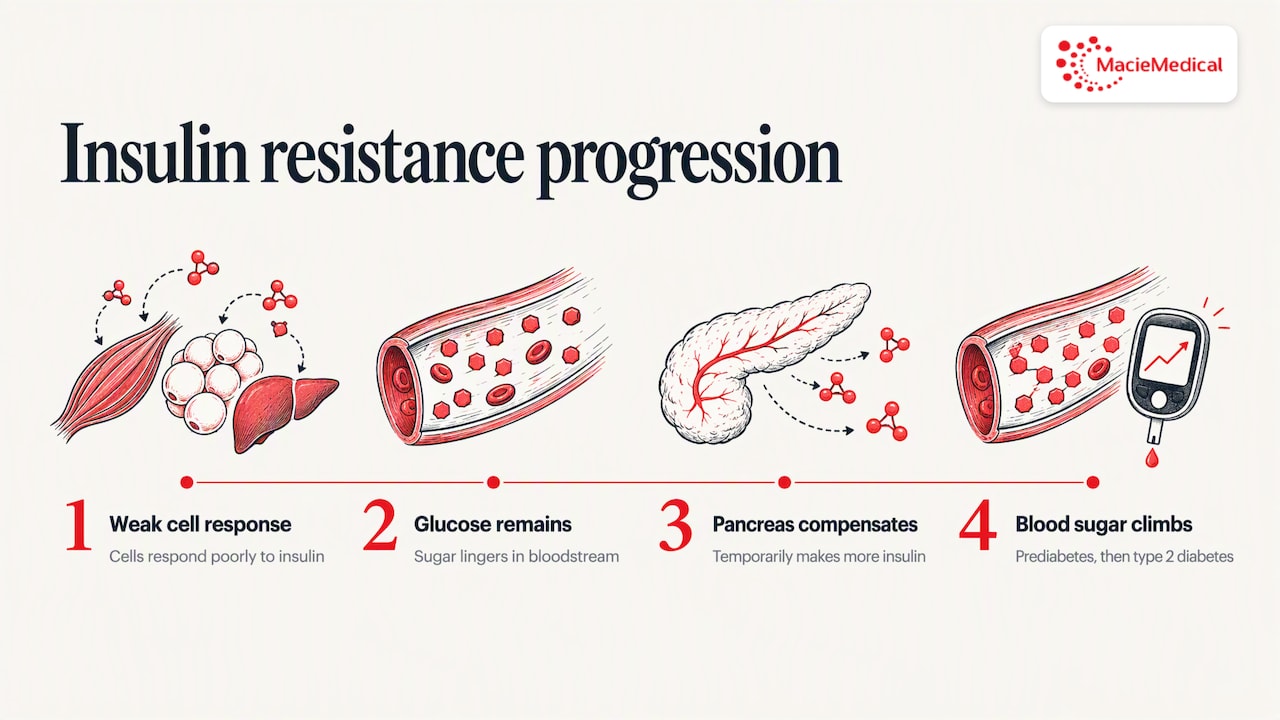
Insulin is a hormone that helps sugar (glucose) move from your blood into your cells for energy. Insulin resistance means the cells in your muscles, fat and liver don’t respond to insulin the way they should. Glucose lingers in the bloodstream instead of being used.
Your pancreas notices and responds by making more insulin. For a while that works. Because the pancreas can raise its output, insulin resistance alone may cause no symptoms at first. Over time, if the pancreas can’t keep up, blood sugar climbs into the prediabetes range and eventually into type 2 diabetes.
That timeline is why this condition is worth catching early. It is also why it is encouraging: the earlier stages are the ones where daily choices have the most influence.
Why you may not feel anything
Many readers come here looking for a checklist of symptoms and leave frustrated that the answer is “often none.” That frustration is understandable, but it is the accurate picture. The CDC explains that you can’t tell whether someone has insulin resistance just by looking at them, and it recommends talking with your doctor if you think you might have it.
The American Diabetes Association’s Clinical Diabetes resource adds that, because people with insulin resistance usually have no symptoms, healthcare providers review your risk factors and check blood glucose to look for prediabetes or diabetes. In other words, the evaluation starts with your history and a simple blood test, not with a symptom list.
If you feel tired, foggy or hungry between meals, those experiences are real and worth mentioning to a clinician. They are also common to many conditions, including poor sleep, stress, thyroid problems and anemia, so they can’t confirm insulin resistance on their own. A visit is how you sort out which explanation fits.
Signs that blood sugar may already be high
When insulin resistance has progressed and blood sugar stays elevated, symptoms of high blood sugar can appear. Clinicians describe these as the classic symptoms of hyperglycemia, and they are important enough that a random blood glucose of 200 mg/dL or higher together with classic symptoms is considered diagnostic for diabetes.
The symptoms people most often describe include:
- Increased thirst that doesn’t go away with drinking
- Passing urine more often than usual, including waking at night to go
- Increased hunger, even after eating
- Blurred vision
- Unusual tiredness
- Cuts or sores that heal slowly
We keep a separate, plain-language walkthrough of these on our page about warning signs that your blood sugar may be high. Women sometimes notice them alongside other changes, which we cover in early signs of diabetes in women.
If you are noticing several of these at once, don’t wait for your next routine visit. Call your primary care office and ask for a prompt appointment so blood sugar can be checked.
Risk factors: the early signals that matter most
Because symptoms arrive late, risk factors do much of the work. The CDC lists several that should prompt a conversation with a clinician: high blood sugar, high triglycerides, high LDL cholesterol, low HDL cholesterol, a family history of type 2 diabetes, and physical inactivity. Having overweight or obesity raises risk, but it isn’t required. People at a healthy weight can have insulin resistance too.
Clinical Diabetes also names being 45 or older, having a first-degree relative with diabetes, being overweight, high blood pressure, low HDL cholesterol and high triglycerides as risk factors.
A quick self-check: do two or more of these describe you? If so, a blood sugar test at your next physical is a sensible step, even if you feel well. If you have been meaning to schedule a yearly exam, our annual physical exam checklist shows what to bring and what to ask.
How doctors check for insulin resistance
This surprises many people: there isn’t a routine “insulin resistance test.” According to NIDDK, health care professionals may not test for insulin resistance at all, because that test is mostly used in research studies. Instead, they look at your risk factors and measure blood glucose to see whether you have prediabetes or diabetes.
The blood tests that matter
For adults who aren’t pregnant, type 2 diabetes can be diagnosed with an A1C of 6.5% or higher, or a fasting plasma glucose of 126 mg/dL or higher, and two abnormal results are generally required. Results below those thresholds but above normal fall in the prediabetes range, which is where lifestyle changes can make the biggest difference.
A1C reflects your average blood sugar over the past few months, and a fasting glucose test is taken after you haven’t eaten for a set period. Your clinician will tell you how to prepare. Blood draws can be done on site; see our on-site lab services for what is available at our practice.
What about a fasting insulin level?
Readers often ask about “normal insulin levels.” An insulin blood test measures how much insulin your pancreas is making, but MedlinePlus notes that an insulin result alone is usually not enough, since levels vary with blood glucose, and diabetes is generally diagnosed with blood glucose tests. An insulin number is best read alongside glucose results and your overall picture, by a clinician who knows your history, rather than compared against a single “normal” range you found online.
How to manage and reverse insulin resistance
The encouraging part is that insulin resistance responds to daily habits. NIDDK states that healthy living and managing weight may help prevent or reverse insulin resistance and prediabetes, and that health care professionals may also prescribe medicines such as metformin to manage blood glucose and help prevent type 2 diabetes.
The CDC points to the same core set: physical activity, weight loss if you have overweight or obesity, a balanced diet, stress management and enough sleep. Here is how to make those manageable.
Move more, and break up sitting
The American Diabetes Association’s guidance suggests breaking up long periods of sitting about every 90 minutes and working toward 30 minutes of brisk walking, five days a week. If that sounds like a lot, start with a 10-minute walk after your largest meal and build from there. The CDC’s advice is not to wait for a diagnosis: the earlier you start moving more, the better off you will be.

Build a balanced plate
The CDC describes a balanced diet as one with non-starchy vegetables, fruits, whole grains and lean proteins. In practice, that might mean filling half your plate with vegetables, choosing whole grains over refined ones, and including a protein at every meal so you aren’t relying on snacks to get through the afternoon. If you want help turning those principles into a weekly routine, this guide to an eating plan for insulin resistance walks through how to organize meals.
Aim for realistic weight loss
You don’t need dramatic numbers. In the Diabetes Prevention Program, a major US research study, people at high risk for diabetes lowered their chance of developing it by losing 5% to 7% of their starting weight. For someone who weighs 200 pounds, that is roughly 10 to 14 pounds. A target that size is a clearer path than a vague goal of “losing weight.”
When diet and exercise alone haven’t been enough, medical support can help. Our overview of insulin resistance and weight loss treatment options explains what a supervised approach can look like, and how medical weight loss works covers the process step by step.
Protect your sleep and manage stress
It’s easy to overlook, but managing stress and getting enough sleep can also help you reach your health goals. Treat sleep as part of the plan, not a bonus. A consistent bedtime and a short wind-down routine are small changes you can keep.
Start small and use a program
Change is hard to sustain alone. NIDDK suggests you may want to start with small changes and join a lifestyle change program through the National Diabetes Prevention Program. Pair that with regular follow-up so someone is watching your numbers with you. For ongoing glucose tracking after a diagnosis, see type 2 diabetes monitoring made practical and our guidelines for managing blood sugar.
When to see a doctor
Talk with a doctor if you think you might have insulin resistance. That advice from the CDC applies in these situations:
- You have two or more risk factors, such as a parent or sibling with diabetes, high triglycerides, low HDL or high blood pressure
- You are 45 or older and haven’t had blood sugar checked recently
- You have noticed increased thirst, frequent urination, blurred vision or slow-healing sores
- You have been told your blood sugar was “borderline” and nobody followed up
A single visit can include a review of your history, blood pressure, a lab draw and a plan you understand before you leave.
Our perspective
At Macie Medical, we see insulin resistance as one of the clearest examples of why primary care should be a long-term relationship. The condition rarely announces itself. It shows up in a family history, a cholesterol panel, a blood pressure reading or a number that crept up over a few years. A doctor who knows you over time is in the best position to notice that pattern before it becomes diabetes.
We also believe the conversation matters as much as the lab result. Our practice was built on the promise that you will be heard, so we take the time to ask about your sleep, your schedule, your family and what has or hasn’t worked before. A plan that doesn’t fit your life won’t last, so we build one around what you can realistically keep doing.
Dr. Judith Aniekwena is board-certified in both internal medicine and obesity medicine, which means blood sugar, blood pressure and weight can be addressed together rather than in separate appointments. When appropriate, that can include physician-supervised weight management and medications. Our goal is that you leave each visit understanding your plan and feeling that your health has a home base.
the author
Get checked in Katy
If your risk factors add up, or you simply haven’t had your blood sugar checked in a while, we can help you take the first step. Our team provides adult primary care, annual physicals, on-site lab work and physician-supervised weight loss for patients in Katy, Cypress, Richmond and Memorial City, with telehealth available across Texas.
If you prefer a self-pay option, our cash-pay clinic lists Package 1 at $500 per year and Package 2 at $700 per year, with additional visits at $150 per visit. You can also browse all our services or book online to schedule your visit.
FAQ
Can you have insulin resistance without any symptoms?
Yes, and that is the most common situation. Your pancreas makes extra insulin to keep blood glucose in a healthy range, so insulin resistance alone may have no symptoms at first. Risk factors and blood tests are how it is usually found.
Can insulin resistance be reversed?
It often can be improved. NIDDK says healthy living and weight management may help prevent or reverse insulin resistance and prediabetes. Your doctor may also discuss medication such as metformin, depending on your results and health history.
What is the best way to test for insulin resistance?
There isn’t a standard routine test for insulin resistance itself. Clinicians typically review your risk factors and order blood glucose tests such as A1C or fasting glucose, since those identify prediabetes and diabetes. A fasting insulin level alone usually isn’t enough, because it varies with blood glucose.
Do I need to be overweight to have insulin resistance?
No. Extra weight raises your risk, but the CDC notes that it isn’t required. Family history, inactivity and abnormal cholesterol or triglycerides can all contribute, so it’s worth discussing screening even at a healthy weight.
How much exercise helps?
A good target is working toward 30 minutes of brisk walking five days a week and breaking up long stretches of sitting every 90 minutes. Start with whatever you can do consistently, and increase gradually. If you have heart disease or other conditions, ask your doctor which activity level is right for you.
Sources
- Insulin Resistance & Prediabetes, NIDDK
- About Insulin Resistance and Type 2 Diabetes, CDC
- Insulin Resistance and Diabetes, American Diabetes Association
- Good to Know: All About Insulin Resistance, Clinical Diabetes
- Diagnosing Type 2 Diabetes and Identifying Prediabetes, Indian Health Service
- Insulin in Blood Test, MedlinePlus